Supporting DVA-Funded Clients as an Independent Support Worker
01 September 2026
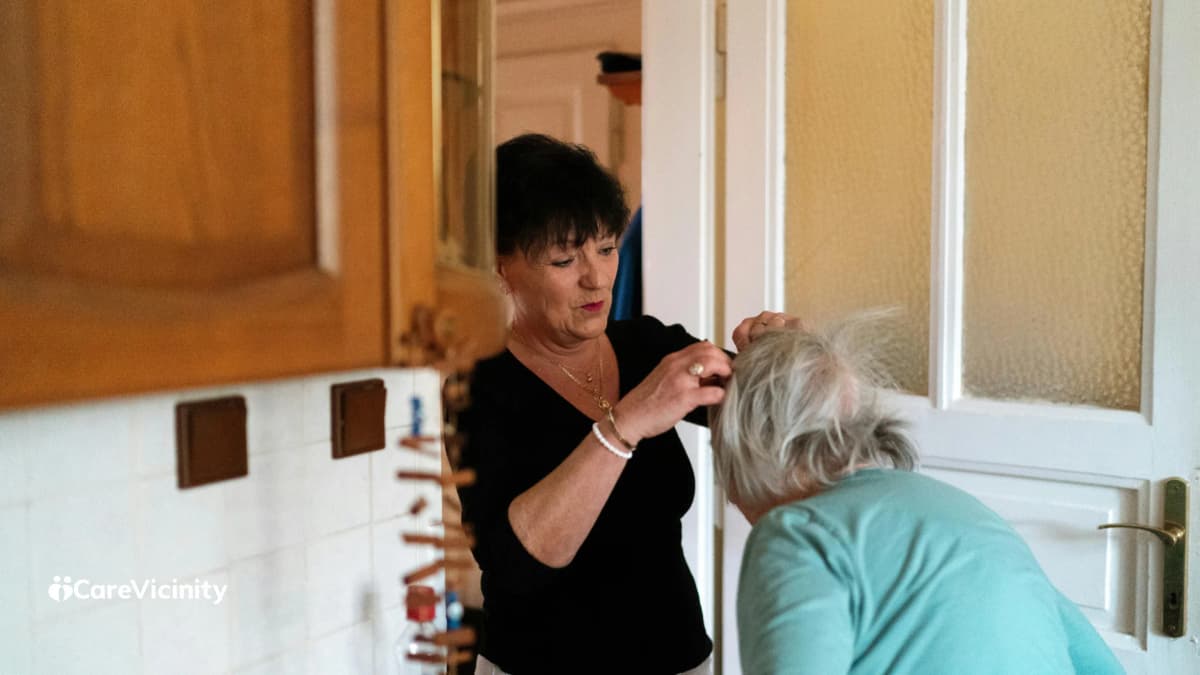
Veterans' Home Care work is a genuine niche for independent support workers, and one a lot of providers don't talk about clearly. If you're already registered as an independent support worker, taking on DVA-funded clients doesn't require a separate qualification - it requires understanding a slightly different funding and eligibility picture to the one you'd explain to an aged-care client.
In short: CareVicinity supports Veterans' Home Care and other DVA/Household Services categories on the platform. DVA - not CareVicinity, and not you - determines who's eligible. The onboarding and screening bar for this work is the same as general aged-care work: a current police check.
What DVA-funded support actually is
Veterans' Home Care (VHC) is a Department of Veterans' Affairs program, separate from Support at Home and separate from Community Nursing. To be eligible for a VHC assessment, a person must hold a DVA Veteran Gold Card (all conditions, within Australia) or a DVA Veteran White Card (specific conditions and/or non-liability health care), and live at home with difficulty performing activities of daily living. DVA arranges assessments directly (by phone, 1300 550 450) - it isn't something you or CareVicinity assess or confirm on a client's behalf.
CareVicinity is approved to support Veterans' Home Care and other general DVA services, plus Household Services, on the platform. That's a fact about what CareVicinity itself is set up for - it says nothing about whether a specific client you're speaking with is eligible. That determination sits with DVA alone.
What this means day to day as a support worker
Practically, taking on DVA-funded clients looks like most of your other CareVicinity work: you set your own hourly rate, you're an independent contractor rather than an employee, and CareVicinity's usual 12.5% platform fee applies the same way it does across the rest of the platform. The main difference is who's funding the client's care and what language is safe to use around it.
Keep DVA, Support at Home and Community Nursing distinct in anything you tell a client. They're separate government schemes with separate rules. Don't imply DVA covers something that's actually a Support at Home service, or the reverse - if a client is genuinely unsure which program applies to them, the honest answer is to point them back to DVA (1300 550 450), not to guess on their behalf.
Screening: nothing extra required for DVA work
CareVicinity requires an acceptable background screening check before your profile is approved. For general aged-care or DVA work, a current police check is accepted - there's no separate DVA-specific screening tier to complete. (NDIS-related work is the exception: that requires an NDIS Worker Screening Clearance instead of a standalone police check. If you're not doing NDIS work, this doesn't apply to you.)
Where your role starts and stops
Two things worth being precise about with any DVA-funded client:
You don't determine eligibility. If a prospective client asks whether they qualify for VHC, or what their card covers, that's a DVA question, not a CareVicinity or support-worker one.
You're not confirming card type or entitlements on their behalf. Gold Card and White Card eligibility rules differ, and DVA is the source for exactly what a given card covers - referring a client there directly avoids you inadvertently giving advice you're not in a position to guarantee.
FAQ
Do I need extra qualifications to support DVA-funded clients? No separate qualification is required beyond CareVicinity's standard screening. A current police check is sufficient for general aged-care and DVA work, the same as any other client.
Does CareVicinity decide whether a client is eligible for DVA funding? No. CareVicinity supports Veterans' Home Care and other DVA/Household Services on the platform, but DVA determines individual eligibility. Refer eligibility questions to DVA directly (1300 550 450).
Is the platform fee different for DVA-funded work? No. The same 12.5% platform fee and independent-contractor rate-setting apply across CareVicinity, regardless of a client's funding source.
What's the difference between VHC, Support at Home and Community Nursing? They're separate DVA/government schemes with different eligibility and coverage rules. Keep them distinct when talking to clients, and point genuinely uncertain questions back to DVA rather than guessing.
Where to start
If you're not yet registered as an independent support worker on CareVicinity, how to become an independent support worker with CareVicinity covers that first step. Clients navigating DVA eligibility themselves can start with DVA home support: where to start and how to find support.